Learning how to read in an exciting experience for most kids. First, there is the alphabet, then words, then sentences and before long, they are reading all kinds of wonderful, magical stories. Here are some stories about books and reading that budding bibliophiles just might find to be fun and interesting and reluctant readers might find inspiring.
I Am A Story written and illustrated by Dan Yaccarino
HarperCollins, 2016, 40 pages, age 4+
Here is a wonderful introduction to history of storytelling, beginning with the drawings by people living in caves, to the complicated hieroglyphics of the early Egyptians, to the detailed medieval tapestries and hand-made illuminated books to the invention of the printing press and the publication of books as we know them. Authors wants to tell their stories and we want read them. Yaccarino shows the readers the different ways people get their books, the wide variety of emotions they can elicit, the negative reactions to some books that are banned, censored or burned, and the inspiration the can encourage. Books, he concluded, will live forever. This is an ideal book for curious young readers who might wonder how books began and developed. It's also a wonderful read-aloud for working up enthusiasm in kids just beginning to read, as well as kids who already read - I get chills just imagining the discussions each page in this book will encourage.

How This Book Was Made by Mac Barnett, illustrated by Adam Rex
Disney Hyperion, 2016, 42 pages, age 3+
Now that kids know that stories come from someone's imagination or experience, it's time to see how a story becomes a book. And Mac Barnett has done just that. He begins by tracing the idea for a story through draft after draft, explaining the role of a book editor, and what happens up to the point where the author is finished writing. Then it is off to the illustrator and when he is finished, everything is sent away to be printed until finally the book is finished. Well, actually, kids may be surprised to discover that a book isn't done until it is in the hands of readers like themselves. This is a fun book that not only shows how a book it made, but how an author's imagination works to create and embellish stories that kids will want to read again and again.
This Is My Book! written and illustrated by Mark Pett (and no one else)
Knopf BFYR, 2016, 40 pages, age 3+
I really found myself chuckling all the way through this charming book about who really writes a book. Author friends have told me that sometimes when they are writing, their characters take off in directions that were not part of the plan. And that is just what happens here. As soon as he draws Percy the Perfectly Polite Panda, the author is informed by the panda that he prefers to be called Spike. Next thing he knows, Spike has colored on the clean white pages, has added friends, as a few other embellishments like a flap, a pull-tab and a pop-up, all against the author's wishes. In the end, though, author, Spike and friends all concede that a book not only belongs to each of them, but to the reader, as well. In fact, there is even a small blank book in a pocket at the end for the reader to help them write the book. Breaking the fourth wall doesn't always work, but this one is a fun way of introducing the idea of metafiction to young readers and inviting them into the writing process, literally.

We Are in a Book! (Elephant & Piggie #13) written and illustrated by Mo Willems
Disney Hyperion, 2010, 57 pages, age 3+
Another favorite book that breaks the fourth wall. Careful Gerald and his more exuberant friend Piggie discover they are characters in a book after noticing that someone is looking at them. A monster? Nope, it's a reader reading the word bubbles. After making the reader say the word 'banana and laughing themselves silly over it, much to his chagrin, Gerald learns from Piggie that a book ends and theirs ends on Page 57. What to do? Ask the reader to read their book again, and what reader wouldn't want to read more Elephant and Piggie? This is a delightful book, just right for beginning readers. Willems always seems to know just what kids need and want. This is probably my favorite E & P book, and it was deservedly a
Cybils winner in 2010:
How Rocket Learned to Read written and illustrated by Tad Hills
Schwartz & Wade, 2010, 40 pages, age 3+
Rocket really doesn't have an interest in learning out to read, he would much rather run and play and take naps, but when a little yellow bird hangs up her alphabet banner and begins to read, Rocket finds himself captivated by and oddly curious about the bird's story. And everyday after that, the bird read and taught Rocket the alphabet. When the bird flew south for the winter, Rocket practiced what he had learned. When the bird returned in spring, she and Rocket spent their time reading all kinds of stories together. This is such a wonderful story about the joy of learning how to read and Rocket's teacher is one smart bird - giving him just enough to make him so curious to know what happens in that first story bird read, that came back for more and was hooked. And as the seasons show, learning to read is a slow, steady process for young readers like Rocket, but well worth the effort.

Lola at the Library by Anna McQuinn, illustrated by Rosalind Beardshaw
Charlesbridge, 2006, 32 pages, age 3+
Lola loves Tuesdays. It's the day she and her mom go to the library. Lola packs her backpack with books to return and, of course, her library card. Sometimes there is story time, other times there is singing with the other kids at the library. After checking out their books, Lola and her mom end their morning out together with a snack. This is a great book for introducing young kids to the library and how it works. And, I know story time is very popular and always packed at my library. I really like Lola's enthusiasm about going to the library, bringing back her books and getting new ones, and that her mom also checks out books for herself - a little modeling behavior by mom. Parents who like read generally have children who like to read. The colorful illustrations are done in acrylics and compliment the text. A perfect book for parents and teachers to share with budding readers.
Madeline Finn and the Library Dog written and illustrated by Lisa Papp
Peachtree, 2016, 32 pages, age 4+
Sometimes, beginning readers just don't like to read because they can't figure out the words, and reading out loud is particularly difficult. Madeline Finn would like nothing more than to star sticker from her teacher, but all she gets is a heart that says Keep Trying. But when the librarian introduces Madeline to Bonnie, a big white dog who is a good listener, she can't help liking the dog and discovers it's fun to read with her. But one day, Bonnie isn't at the library, but later, with her new reading skills, Madeline finally gets her desired star for reading. And Bonnie? Well, let's just say when Bonnie returns to the library, Madeline has a much larger puppy audience to read to. Reading to animals is something that is being done around the country, mostly in animal shelter. According to the ASPCA, as children improve their literacy skills, they also learn compassion towards the animals, while the animals become more socialized increasing their chance of being adopted. You can check with your local shelter to see if they have programs like this.

A Child of Books written by Oliver Jeffers, illustrated by Oliver Jeffers and Sam Winston
Candlewick, 2016, 40 pages, age 4+
In spare text and with line drawings that combine with the words and sentences of a variety books, Jeffers and Winston have created an homage to the power of books and the stories they tell. A young child, a child of books, invites a boy to come with her on an imaginative journey to show him the world of books. To get there, they climb the mountain of make-believe, lose themselves in the forests of fairy-tales, escape monsters in haunted castles, all created by using snippets of texts from stories like The Wizard of Oz, Peter Pan, and Hansel and Gretel, among others, many others. This is a celebration of the written word and ideal for young readers just starting out on their own journeys through the world of books. We took a magnifying glass to read all the words and titles used, which kept us busy for a long time and generated lots of conversations and curiosity about books and reading. This is definitely one book you won't want to miss sharing with young readers.


How To Read a Story by Kate Messner, illustrated by Mark Siegel
Chronicle Books, 2015, 32 pages, age 5+
Sure, your young readers may already know how to read, but do they really know how to read a story. In this charming picture book, the 10 simple to follow steps are outlines for really reading a story. Each step elaborates just what is involves. The whimsical illustrations are done in ink and watercolor in bright, happy colors and compliment the text on every page. I loved how he depicts the young reader following the step listed and then reading his story aloud to the family dog so well that he begins to attract and draw other family members into his listening circle. This is a great read aloud and could easily become a family favorite.
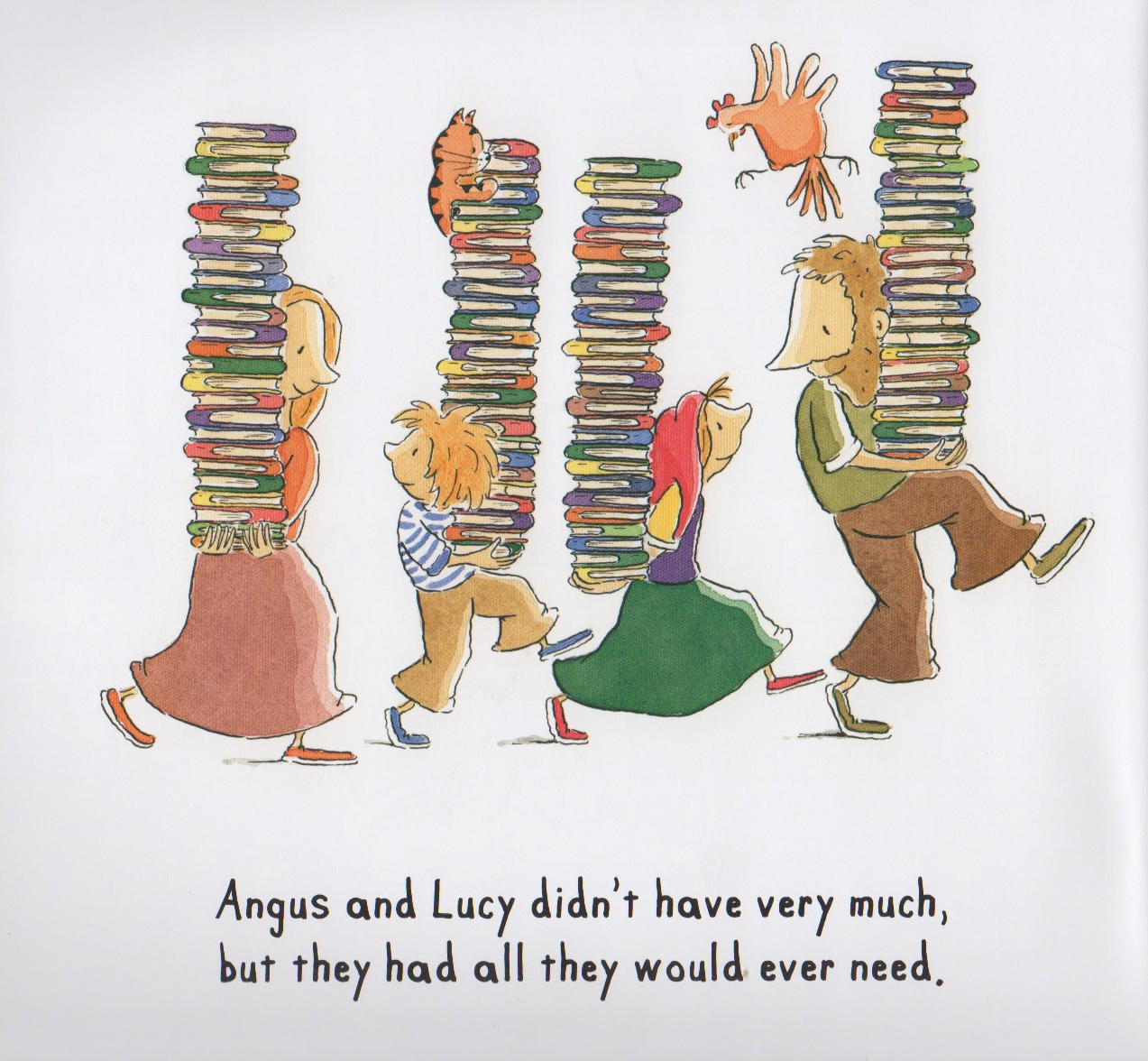
 The Children Who Loved Books written and illustrated by Peter Carnavas
Kane Miller, 2013, 32 pages, age 4+
The Children Who Loved Books written and illustrated by Peter Carnavas
Kane Miller, 2013, 32 pages, age 4+
Here is a delightful story about a family that loves reading so much, that even though they don't have a TV or a car or even a house (they live in a small old fashioned trailer), they do have books, lots and lots of books, piled here, there and everywhere. But what the day comes that there are so many books they don't fit in the house anymore, the family realizes it it time to do something. This is a wonderful, charming homage to books, reading, book lovers and libraries! And it is sure to become a favorite wth all like-minded folks, young and old.