Showing posts with label Speculative Fiction. Show all posts

Sunday, November 24, 2019

MMGM: The Little Grey Girl (The Wild Magic Trilogy #2) by Celine Kiernan


It's moving day for Mup Taylor, her mam, dad, and little brother Tipper now that the old queen, Mup's grandmother, and her band of raggedly witches have been defeated. Of course, the old queen and her raggedly entourage aren't dead, just gone - but for how long is anybody's guess. Now, though, it's off to the magical Witches Borough in the Glittering Land, leaving the mundane world behind, to live in the old queen's enormous castle. But no sooner do they arrive but there's trouble. Mam wants to run the Witches Borough as a democracy, but the people who sided with her instead of the old queen expect her to accept the crown and rule them, more kindly than her mother had, but still as a monarchy.

The castle is big and cold, and there are a number of ghosts living there as well a real people. Mup has her own room across from her best friend Crow's room. Crow is a shapeshifting boy who can transform into a raven. He has apparently lost his parents, but for all that he wants to be a part of a family like the Taylors, he also wants to be free. And he has difficulty dealing with Mup's raggedly witch magic. It is that kind of magic that been used to force the people of the Glittering Land into submission.

Even before she has settled into her new home, she notices a girl around her age lucking in the courtyard near the tunnel that leads to the dungeons where Mup and her dad had been kept by the old queen. The girl, who has a grey tint to her specter, turns out to be a ghost hellbent on causing vengeful trouble for the castle's new occupants, especially Mup. Using her own ashiness, the grey girl draws pictures around the castle which causes anyone who goes near them be come paralyzed with overwhelming grief. Is the grey girl part of the old queen's plan to defeat her daughter and return to power? It certainly seems so, especially when it begins to snow so heavily it isolated the people in the castle and feels like a curse from the old queen.

I loved reading Begone the Raggedly Witches and couldn't wait to read The Little Grey Girl. And boy howdy, I was not disappointed. Most of the story takes place in or around the castle grounds, including the dungeons under the castle, which makes sense since this book doesn't really continue the power tug of war between the old queen and her daughter. Forbidden to use magic under the old queen's oppressive rule, the residents of the Witches Borough are at a loss for who they are as a people now that they can use their innate magical abilities.

I was very happy to see that Kierman has kept all the characters true to who they were in the first book. Tipper, enjoying life in the shape of a dog, is just as adorable as ever, while Mup, mam, and dad are the same kind, concerned, and caring people and Mup's courage in confronting the dungeons to discover what is motiving the little grey girl to unleash so much suffering on the castle's residents is admirable. Crow is still a most conflicted character, not sure what he really wants, but always loyal to Mup, even when they have a falling out.

Once again, Kiernan has tackled familiar themes of strong family ties, true friendship, as well as the disastrous affects of oppression on people  individually and as a whole, themes that will resonant all too much with today's world.

Oh, yes, and the good news is that Book Three, The Promise Witch, is scheduled to be released in England on June 4, 2020, which gives everyone plenty of time to read, reread, and savor Begone the Raggedly Witches and The Little Grey Girl.

This book is recommended for readers age 9+
This book was an EARC gratefully received from the publisher, Candlewick Press, and NetGalley.
Be sure to check out the other Marvelous Middle Grade Monday offerings, now being carried on by Greg at Always in the Middle. 

Friday, October 11, 2019

Blog Tour: The Bootlace Magician (Circus Mirandus Book 2) by Cassie Beasley


As we learned in the first book, once you have visited Circus Mirandus, you usually can't return. That's the rule. Mostly. But some lucky people do get to return, and for us, the lucky ones, the cost of the ticket is reading the book...oh, yes, and believing in magic.

Micah Tuttle, 11, returned and has been traveling with the Circus Mirandus for several months now, and living with his guardian, the Lightbender. Basically happy, living a peaceful life with the circus, Micah is still painfully missing his deceased grandpa Ephraim, and his best friend Jenny Mendoza back in Peal, and hoping to discover just what magic his knots can do. Luckily, Jenny is coming to visit Circus Mirandus for a day, armed with a chart to help Micah figure that out.

Micah has also been spending a lot of time in the menagerie tent, visiting Fish in his aquarium and feeding him knots full of memories. Ephraim Tuttle had used Fish so long ago to enter Circus Mirandus. Mr. Head, the circus manager, has also decided that Micah is just the person to care for an abandoned baby Unicorn named Terpsichore. But Micah knows that Unicorns didn't abandon their babies, no matter what and he is puzzled by what could have happened to Terp and his mother.

But even after Micah figures out what may have happened to Terp, it's treated like a long shot. Yet, when a sudden severe storm hits during Jenny's visit and lightning strikes the menagerie tent, it begins to look like someone is trying to hurt or destroy Circus Mirandus. And after finding some notebooks that his grandmother, Victoria Starling, had borrowed before she was banished from the circus, Micah has a pretty good idea what is happening, but why? Victoria had been called the Bird Woman, flying with a flock of birds that she controlled with a wordless song - until one night she destroyed the birds during a show, angry that the Lightbender would not let her achieve what she so desperately craved.

But when Victoria Starling attacks the circus again, it looks as though it's days are numbered, and now she wants to get Micah to help her get what she has always craved so badly - fame and glory. But how does Fish figure into her grand scheme?
I loved reading Circus Mirandus and was so happy to learn there would be a sequel. And it is every bit a good as the first book.  Cassie Beasley has once again created a magical world that just felt so familiar and welcoming. I sat and read until I was finished and then went through the book again, not wanting to once again say goodbye to these favorite characters, especially Micah.

Beasley really knows how to flesh out her characters, and even though they felt complete in the first book, they turn out to be even more complex here. Even Micah, just 11, has a true understanding and appreciation for the world he now lives in, but without a desire to abandon the world that Jenny lives in. And Jenny, the rational girl who needed to be convinced that magic existed, has become one of Micah's greatest champions and a great Circus Mirandus enthusiast. It was wonderful watching her excitement during her visit.

The Bootlace Magician does stand on its own, enough background information is provided, but why do that when you can have the joy of reading Circus Mirandus followed by this novel. And like that first novel, this is an extraordinary coming of age story about courage, faith, and the people who become our family, and a story that is not to be missed.

May the Circus Mirandus continue "to fight to keep enchantment alive" in the world for children. And remember, when you hear the drums and pipes, the circus has come to town and you know what to do.

This book is recommended for readers age 9+
This book was a ARC received from Friya at Penguin Random House 

Monday, June 24, 2019

The Afterwards by A.F. Harrold, illustrated by Emily Gravett


December, nicknamed Ember, and Happiness, called Ness, live next door to each other and have been best friends for three years now. They did everything together, walking to and from school, playing in the schoolyard, and having lots of laughs and fun with each other. So Ember is pretty surprised one day when she calls for Ness to walk to school and no one answers the door.

At school, it's announced that one of the students has died after an accident, and to Ember's surprise and distress it turns out to be Ness. This is hard news to take, and Ember is understandably distracted, so when her creepy Uncle Graham picks her up from school one day, she unquestioningly goes to his house with him. When evening comes, he says he is taking Ember home, but instead they end up in a place that is black, white, and grey. There, Uncle Graham finds his recently deceased dog, and Ember find Ness sitting on the steps in front of her now grey empty house. Ember is excited to see Ness, but Ness is quite lackluster and grey.

When Ember discovers that Uncle Graham brought her to this place called the afterwards, where people go to forget their lives and are only echoes of their living selves, in order to swap her living self for his dog's dead self and bring the dog back home - alive and well. Luckily, there's a mangy, but wise cat who takes an interest in Ember, and a mysterious lady named Ms. Todd who gets Ember back among the living.

But...now Ember knows that there is a way to bring back the dead and that is just what she intends to do for Ness. After all, isn't that just what best friends would do? But when Ember finds herself stuck in the afterwards is there really no way out?

The Afterwards is a very dark, surreal fantasy told in the third person from Ember's point of view so the reader is privy to her feelings, thoughts and plans. The writing is simple, straightforward, so matter-of-fact that it makes the uncanny feel almost real. Harrold has imbued Ember with qualities of courage, loyalty, and vulnerability. She never tries to understand what has happened, only focusing on rescuing Ness from death, despite being told over and over by the cat and Ms. Todd that that can't be done. Ember never questions where Uncle Graham got his directions to the afterward, simply accepting that he did. She simply focuses on the task she's set for herself. In this way Harrold effectively deals with themes of loss, grieving,  and then being about to move on and live life.

Gravett's illustrations, often fusing color and grey to distinguish between the living and the deceased add to the sinister feeling of the story, and there were certainly times when I felt like something really ominous what going to happen, but the illustrations brought the story back to where it belonged - disturbing but not horror.

The Afterwards is definitely not going to be everyone's cup of tea, but if you like stories that are dark yet poignant this is a really good choice. In fact, if you loved Neil Gaiman's Coraline, then The Afterwards is definitely a book for you. The writing creates that same haunting feeling of entering an in-between world that exists but doesn't exist, that's familiar but not familiar and it is all deliciously creepy.

This book is recommended for readers age 11+
This book was bought for my personal library

Thursday, April 13, 2017

The Emperor of Any Place by Tim Wynne-Jones


This review was originally posted on my other blog, The Children's War, but since I have just reread the new paperback edition, I thought I would share it here as well.

After his father suddenly dies, Evan Griffin, 16, discovers that he had been reading a book written by a Japanese soldier named Isamu Ōshiro, who found himself stranded on a small island in the Pacific during World War II. The book is a memoir of his life on the island, which he called Kokoro-Jima, and is addressed to his new bride, Hisako back in Saipan. But Evan also discovers a letter to his dad from a man named Leonardo Kraft that seems to connect his estranged grandfather, Griff, a career Marine, to the events that are in the book.

Curious, Evan begins to read Ōshiro's memoir one night when he gets a phone call from his grandfather that he will be at the house for a little while - arriving a week earlier than Evan had expected him. But why? Clearly, it has something to do with Ōshiro's story. But what?

Isamu's story, framed by Evan's story, is riveting. He describes his arrival on Kokorro Jima, what he does to survive despite being severely injured, but he also writes about something else. There are ghostly children on the island who hover close by him, and who Isamu calls his ghostly family. Soon, however, he begins to notice that there are also zombie-like ghoulish creatures, which he calls jikininki and who feed off the dead.

It is the jikininki who lead Isamu to a crashed cargo plane and the two dean pilots. Isamu realizes there is a missing person, the navigator, and eventually he find Derwood Kraft on the beach, seriously injured and who seems to have his own ghost family of children. But along with this gaijin (foreigner), Isamu also discovers Tengu, a monstrous black creature about to attack the American.

That pretty much sets the stage for this incredibly well-written, well-developed, wonderfully crafted novel. At the heart of the story is the mystery of what happened to Isamu and why this is connected to Evan's grandfather. But Tim Wynne-Jones keeps the mystery going without even a hint of what happens until the very end, and getting there is never dull or boring.

As far as I'm concerned, The Emperor of Any Place is definitely top-drawer fantasy, and yes, it is also very graphically detailed. The novel switches between the present and past seamlessly, and Wynne-Jones throws in some seemingly unimportant scenes that only serve to deliciously increase the mood and tension. I'm not much of a zombie fan, but I was totally drawn to this novel and hated to put it down when I had to do something else.

But there is something else that Wynne-Jones wants us to take away beside a great story and that is how tenuously connected the lines between war and peace, friends and enemies, love and hate are and how they impact past to present, generation to generation. As Griff explains to Evan, "[war] ends and then it starts again, and the end of one war inevitably grows out of the war that came before it."

The Emperor of Any Place is one of those novels that took me totally by surprise when I read it and, I have to confess, that reading this novel again was just as pleasurable as the first time.

This book is recommended for readers age 13+
This book was sent to me by the publisher, Candlewick Press

Monday, June 13, 2016

The Charmed Children of Rookskill Castle by Janet Fox


This review was originally posted on my other blog, The Children's War, but I thought I would share it here as well.

It's 1940 and it's time for the three Bateson children, Katherine, 12, Robbie and Amelie to be evacuated to Rookskill Castle in Scotland.  Their father had already left for Europe, on a secret mission for MI6,  but not before he makes arrangements for a new school to be set up for them and other evacuees at the castle.

Before they leave, Kat's Great-Aunt Margaret takes her aside and gives her a gift - a silver chatelaine with its three hanging charms, a scissor, a thimble and a pen.  This chatelaine was a precious family heirloom that Great-Aunt Margaret always wore pinned to her belt.  But with the gift came a warming - the chatelaine can keep them safe because it is magical, but there is always a price to pay for the use of magic.  Logical Kat is skeptical about magic, but reluctantly accepts the chatelaine anyway.

Arriving at the castle, the children meet Lady Eleanor., who Kat notices also wears a chatelaine laden with charms and hidden from view.  She tells them that Gregor, Lord Craig, who is distantly related to the Batesons, is quite ill and must be left completely along. The children are forbidden to wander the castle and the castle grounds and are to stay either in the hallway where their rooms are located or in their rooms, which will be locked every night.   Eventually, they also meet the other students - Peter, an American slightly older than Kat, Isabella, Colin and Jorry. 

It doesn't take long for Kat to begin to think the castle and the cold, aloof Lady Eleanor are very strange, as are the maid Marie, Cook, Hugo the driver who also helps around the castle, and Mr. Storm, their history instructor.  Storm is way overly interested in historical artifacts, especially chatelaines.  But when Kat begins to notices some strange goings on about the castle, and discovers a wireless in the cellar, she begins to suspect that the castle is harboring a German spy.  And who are the children that seem to mysteriously come and go, and then there's Jorry's sudden disappearance, even after his parents come looking for him.

The novel occasionally flashes back to 1745 and the story of Leonora, a young girl who was married to the lord of Rookskill Castle, for the purpose producing a child.  When she fails to do that, she goes to a person only referred to as the magister, who magically helps her get a child, but, of course, there is always a price to pay for using magic and she must pay the magister, a payment that brings us right back to 1940s Scotland.

The Charmed Children of Rookskill Castle is a dark and sinister tale about the forces of good and evil, and I have to confess I  really loved reading it.  Their are the typical tropes of creepy fantasy - weird nighttime noises, ghostlike children appearing and disappearing, a creepy, evil woman, secret passages and spells cast to confuse.  To me, it felt very Gaimanesque and I mean that as compliment. 

Kat is a wonderful character whose logical mind has a hard time accepting that magic might just be real.  On the other hand, her logical mind also mean that she has a real talent for decoding encrypted messages, something that really comes in handy in this novel. 

All the ends relating to this story are tied up by the end of the novel, but there is the hint of a possible sequel because the denouement just isn't a neat and clean as it could be and leaves room for a lot of speculation about Kat's future.

Let me just mention here, for those who may not know this, but Adolf Hitler and the men he surrounded himself with had a serious interest in the occult.

I found this to be an original, spine tingly story, even though at times, I know I figured out things before a young readers might.  Readers who have already zipped through the Harry Potter books and want more of the same will probably also enjoy The Charmed Children of Rookskill Castle.  I know I did.  

Discussion and Project Guide is now available to download thanks to author Janet Fox.

This book is recommended for readers age 10+
This book was an ARC received from the publisher

Monday, May 2, 2016

The Lie Tree by Frances Hardinge


Reverend Erasmus Sunderly and his family, wife Myrtle, daughter Faith,14, six-year-old son Howard, and their Uncle Miles have just moved from Kent, England to the small, remote island of Vane.  The move is supposedly because of an archaeological dig going on on Vane, but in truth, the Reverend, a respected amateur scientist, is leaving because news is about to break that he falsified some of his own fossil finds.  It is hoped that news of the scandal won't follow the family to Vane.

During the trip and upon arrival, Sunderly is particularly protective of a box of his "miscellaneous cuttings," more concerned with these plants than his own family.  Faith, who is a very clever, intelligent girl, and would like to follow in her beloved father's footsteps and become a scientist, too, can't help but wonder what it is about these specimens that make them so special.

Not surprisingly, it doesn't take long for the word of Sunderly's scandal to follow the family to Vane. Soon, no one will speak to them, help them in the village stores or even acknowledge them at church. The Sunderly's have become pariahs on Vane and are effectively shunned.

Faith's curiosity about her father's "miscellaneous cuttings" begins to be satisfied one night when her father takes her out in a rowboat to cave, along with a clothe-covered plant.  Leaving her in the boat, Sunderly takes the plant and disappears into the cave, only to return plantless, and rows them back to shore.

The next morning Faith's father is found dead.  It looks for all the world like a suicide but Myrtle Sunderly manages to flirt enough with him to convince Dr. Jacklers to rule her husband's death an accident.  Faith absolutely doesn't believe her father would take his own life, nor does she believe it was an accident.  Faith is convinced her father was murdered and she is determined to prove it.  To do that, Faith must uncover her father's secrets, and that would include his papers on the mysterious plant he had taken to the cave the night he was murdered, a tree that, she discovers, flourishes in darkness, feeds on lies and reveals truths to those who ate its fruit: "If the Tree could deliver secrets, then perhaps it would unravel for her the mystery of her father's death."

The Lie Tree has been called "a superb Victorian murder melodrama" and it is.  And here's the funny thing - I thought it hadn't grabbed me from the start the way Cuckoo Song did, but imagine my surprise when I realized I has become totally ensnared by The Lie Tree and could hardly bare to put it down when I had to.

It is not a book for everyone, though, but if it is a book for you, you will be treated to a long, winding journey through Victorian thinking.  The action begins around 1868, nine years after publication of Charles Darwin's On the Origin of the Species, a book that talked about evolution and the survival of the fittest and set the religious world on its ear, including Rev. Sunderly and his fellow amateur paleontologists on Vane.

Victorian society also dictated that girls like Faith not entertain ideas about becoming anything other than a good wife who can run her household efficiently.  As her father tells Faith: "A girl cannot be brave, or clever, or skilled as a boy can.  If she is not good, she is nothing."  Faith may love her father very much, but she also have some strong feminist leanings about what a girl can do.

Set on an isolated island, Hardinge is able to provide us with a cast of characters large enough to give the reader a nice cross-section of Victorian life, small enough that she can focus on everyone's unique personality and give them all depth.  And some of her characters will surely surprise you.

But it is Hardinge's writing that really makes her novels so outstanding.  She slowly, slowly unravels her stories using the most eloquently lyrical language.  Among other things, The Lie Tree is a coning of age story, described as only Hardinge: "For the last year, [Faith] had felt like a seesaw, clumsily rocking between childhood and adulthood."  And I remember that feeling so well.

The Lie Tree is perfect for anyone wanting a "Victorian gothic murder mystery, but with extra palaeontology, post mortem photography, feminism and blasting powder" according to the author, Francis Hardinge, but I would also add that it is a thriller about Victorian mores and behaviors. There's even a delicious twist at the end.  And that idea about survival of the fittest - yup, it's there, too.

This book is recommended for readers age 12+
This book was an EARC received from NetGalley

Thursday, March 31, 2016

The Night Parade by Kathryn Tanquary


The worst thing that could happen to Saki Yamamoto, 13, is having to spend three days at her grandmother's remote house.  It is the festival of Obon when families return to their homes, visit and clean the graves of their ancestors, and leave offerings so that their spirits may return and visit their relatives for one night.

But all Saki wants is to be in Tokyo with her friends, instead of no where with no cell service to keep in touch with them.  On her first evening, Saki, her parents, brother and grandmother head into the town to watch fireworks.  When Saki manages to sneak away, and head to the only convenience store, she meets four locals who tell her to take them to the graveyard, and then dare her to ring the sacred bell.

What Saki doesn't know is that ring the sacred bell invoked a death curse.  Later that night, Saki is awakened by a spirit fox with four tails, who tells her he is there to help her on her quest and that she must now join the Night Parade, for which they are already late.  The Night Parade is the biggest celebration in the spirit world, a time when they pare homage at the shrine on the mountaintop and lasting three nights.  Now, Saki must visit the shrine in order to break the curse.

But things don't go well for Saki the first night of the Night Parade with the fox, who turns out to be quite a trickster, yet in the morning, she finds herself somehow returned to her bed in her grandmother's house.  There are two more nights left of the Night Parade, and each night Saki finds herself with a different spirit guide (besides the fox, there is a tanuki and a tengu).   But the closer she gets to the shrink on the mountain, the more difficult things become, and Saki is running out of time.  Will she actually manage to get the death curse lifted before it is time to go back to Tokyo?

No one was more surprised than I was about this book.  I really didn't like it at first, thinking I've read so many characters like Saki lately, and as well as her cliché video-playing obsessed brother, the bullies, and the busy almost neglectful parents.  Only the grandmother and another girl Saki's age Maeda stood out (and I kept wondering if the grandmother knows something about the Night Parade).  But it didn't take long to see that this was not going in the usual direction.

Tanquary, who lives in Japan and teaches English there (a kindred soul to my own Kiddo who taught English in China), has cleverly taken Japanese tradition, culture and folklore, mixed it into the life of a contemporary girl and produced a wonderful work of speculative fiction.  I had fun reading The Night Parade and only wished for another night or two.

The good part is that you don't need to know anything about Japanese ctradition, ulture or folklore to appreciate this novel.  What you need to know is there, and while there is a night parade in Japanese folklore, the Hyakki Yagyō (night parade of 100 demons), the one in this novel is only loosely based on it.

One of the things I always look for in a middle grade novel is whether the main character grows, and over the course of The Night Parade, I saw Saki go from a shallow, self-centered, follower just wanting people to see her as "cool" to a caring, thoughtful girl who no longer cares what people think of her because of her adventures in the spirit world.  While Saki might be in a spirit world, there is no magic, and she must meet the challenges presented to her despite the tricksters and other obstacles using her intelligence and reasoning power.  I always like to see that in a character.

The Night Parade is a fun, imaginative novel, not for everyone, but if you like your speculative fiction a little different than the usual, this is for you.

The publisher, Sourcebooks has provided a very useful Educator's Guide to download.

And they have also provided fun Activity Kit for your own Night Parade event.

This book is recommended for readers age 9+
This book was an EARC received from NetGalley

Wednesday, December 30, 2015

Lair of Dreams (The Diviners #2) by Libba Bray

I waited a long time for the sequel to Libba Bray’s The Diviners, but it finally came out in August at a chunky 608 pages.  Was it worth the wait?  You bet it was.

Lair of Dreams picks up shortly after the ending of Book 1.  Having outed herself as a diviner in order to solve the mystery of the Pentacle Killer, a serial murderer in The Diviners, Evie O’Neill, 17, is now America’s Sweetheart Seer, reading secrets of people on the radio.  As a diviner, you may recall, Evie can “read” another person’s deepest, darkest secrets simply by holding an object of theirs, 

Evie is also estranged from her Uncle Will, the curator of the Museum of American Folklore, Superstition, and the Occult, and has been living in one hotel after another, getting kicked out for having too many raucous parties.  Evie still hangs out with her old friends, including Ziegfeld girl Theta Knight and musician Henry DuBois, as well as Mabel and Jericho, who works for her uncle.  And in Harlem Memphis Campbell, Theta’s love interest, is still trying to come to terms with his own abilities as a healer.  

Henry has decided to try to find his lost love, Louis, also a musician with whom Henry was in love when they lived in New Orleans.  Using his ability to dream-walk, Henry no sooner begins his search when he meets Ling Chan, 17, a girl from Chinatown who can also dream walk and speak to the dead.  But Henry isn't the only dream walker Ling has met.  Wei-Mae is a young girl traveling from China to New York to be married to a wealthy man she has never met.  

And then there is Sam Lloyd, the petty thief who stole Evie’s $20.00 when she first arrived in NYC, and has been a not-always-welcomed mainstay in her life ever since.  And now, much to Evie’s chagrin, she finds herself in a sham engagement to Sam, to the joy of her boss who sees it as free publicity for his radio station.

Sam, however, is more obsessed with the idea of something called Project Buffalo.  Whatever it is, it took his mother away from him as a boy and now he’s on a mission to discover why and how and where she is.  Project Buffalo was briefly mentioned in The Diviners, in a newspaper article Sam was reading about a young girl who died of a mysterious sleeping sickness but not before she uttered the words “Project Buffalo.” 

And now it seems that that mysterious sleeping sickness has gripped New York, and it appears to be centered in Chinatown.  It’s going to take a concerted effort of all the diviners to solve this mystery, but Evie is going through some stuff of her own.  Feeling less sure of herself, she parties and drinks too much to escape the disturbing memories of the Pentacle Killer.  When she starts making bad decisions and poor choices, it begins to look pretty doubtful that she will be much help.  

But when one of her inner circle falls victim to the sleeping sickness, will Evie be able to pull herself out of her boozy stupor and help her friend?

If this sounds a bit like a recap of The Diviner, it's because saying too much about Lair of Dreams means giving away too much of the story and it's way too delicious to spoil it for other readers.  Suffice it to say that this is a book that will certainly entertain, with it many story lines and it's twists and turns, but it will also make you think.  It is historical fiction that gives us a wonderful picture of life in 1920s New York.  Prohibition is still the law, so there are lots of speakeasies and glitzy flappers wearing headache bands and strings of pearls,  and the bright, fast rhythms of jazz bands is the music of the moment, but there is also a dark side - a side that exposes prejudice and mistrust of Chinese immigrants, gays and African Americans.  

Lair of Dreams is the second volume of a planned four volume Diviners series.  Evie has a smaller role to play in this book than she did in The Diviners, so I am wondering if each book will showcase another diviner, while the rest of the characters we are already familiar with remain in the picture as well.   I personally would really like to read more about Memphis, Isiah, and of course Blind Bill, characters with their own abilities living in Harlem.

Which leads me to the question - does Lair of Dreams stand alone even if it is part of a series.  I think it does, but given what and how much Bray refers to the has people and events in The Diviners, I would definitely read that first.  Both volumes are big, but so compelling, you won't want to put them down until you are done.

Now, I can't wait to read the three volume in The Diviners series.

This book is recommended for readers age 12+
This book was an EARC received from NetGalley


Tuesday, December 15, 2015

Blog Tour: The Secret Files of Fairday Morrow by Jessica Haight & Stephanie Robinson, illustrated by Roman Muradov


When I first started blogging, I came across a website called The Secret Files of Fairday Morrow.  Yes, it is a book review blog, but, at that time, there was also an excerpt of a middle grade mystery to two blog owners, Jessica Haight and Stephanie Robinson, were writing.  Being a compulsive reader, I naturally read the excerpt.  And it was that tasty amuse-bouche that made me want more.  And now, it’s happened!  The Secret Files of Fairday Morrow has been published and now we can all enjoy what I hope is only Fairday’s first of many mystery-adventures.     

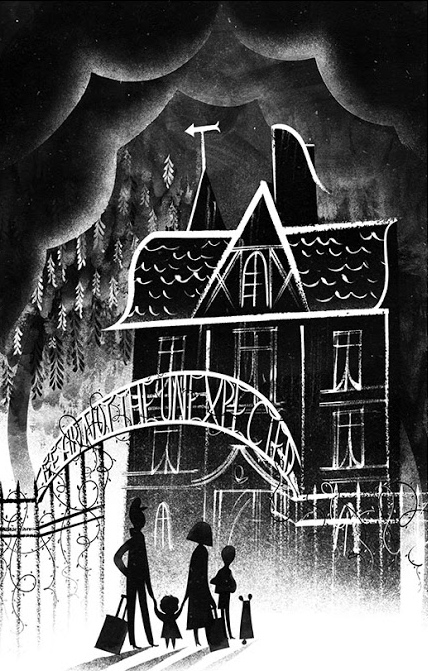
When Fairday's parents decide to move her out of Manhattan and into the Begonia House, a large old rumbling house that has been vacant for years in a place called Ashpot, Connecticut, she wasn't very happy.  Not only did it mean leaving her best friend and partner in the DMS (Detective Mystery Squad) Lizzy, but as Fairday, her parents and little sister Margo drove up to the house, they were confronted with the very ominous warning, 

Fear Not The Unexpected


right across the front gates.  What a welcome!


As if that sign weren't creepy enough, once in the house Fairday is sure she hears bagpipe music, but when she finds a dusty, moldy bagpipe in a locked third floor room, she's sure the music didn't come from there, but where?

Over her first weekend, Fairday begins to suspect that something is going on it the house.  Anxious for Lizzy to come visit the next weekend to explore the house and especially the locked room more, Fairday begins middle school on Monday.  Things go pretty well for being the new girl, and by the end of the week, Fairday has made a friend, Marcus, a fast runner also called Brocket the Rocket.  And an enemy, but he's really just an annoyance.

Begonia House has a haunting history, which people , even her classmates, seem to know about, but not know the details.  And sure enough, odd things begin to happen.  By the time Lizzy arrives the next weekend, Fairday has already put together clues and questions to be investigated:

Who is the red-haired lady Fairday catches glimpses of?
Why did the sand in the odd, old hour glass stop running even though it isn't clogged up?
Does it have anything to do with the kitchen clock being stuck at 3 o'clock?
How did Margo get into a mirror that reflects a door which doesn't exist? 
And who owns the bright red diamond and ruby covered high-heeled sneaker that can out of the mirror with Margo?
And lastly, why is Lizzy flirting with Marcus?  Is she crushing on him?

As luck would have it, Fairday is assigned an interview for school with her teacher's grandfather, Larry Lovell, a former investigative reporter who just may hold some answers to the mystery surrounding the Begonia House, it's original owner Thurston Begonia, and his only daughter Ruby, who suddenly disappeared on her wedding day over 50 years ago.


The Secret Files of Fairday Morrow is a mystery full of mystery.  It's fun, fast and well-written, well-plotted and really is worth the wait.  But luckily, you don't have to wait, since the book is available and you can enter the giveaway to get your owned signed copy: 

a Rafflecopter giveaway


While you're waiting, why not enjoy the trailer for The Secret Files of Fairday Morrow:


And who are the lovely ladies who authored The Secret Files of Fairday Morrow:


Jessica Haight is a true New Englander, with a deep desire to be near the ocean and a love of the four seasons. She enjoys drawing while standing up and cultivating magic in her garden. She easily floats away in the pages of a good story and is still waiting for her owl from Hogwarts. Jessica lives in Connecticut with her charming fiancé James; dog Jack; cat Bill; and a very entitled bunny named Alice.


Stephanie Robinson lives with her husband in a quiet town, though not as quaint as Ashpot. After teaching fifth grade for almost fifteen years, she is now enjoying her role as a school media specialist.  One of the many benefits of her job is that she learns something new every day.  When Stephanie isn't working, she spends her time creating stories, getting lost in books, and traveling to new places.

You can follow Jess, Stephanie and Fairday on Fairday's blog, Twitter, the official book page Fear Not the Unexpected, Pinterest

Tuesday, December 1, 2015

The Rest of Us Just Live Here by Patrick Ness

If you have ever wondered what everyone else was doing while heroes like Katnis Everdeen, Harry Potter, Tris Prior and Buffy the Vampire Slayer are busy saving the world from evil conquest, this is the book for you.  They may be the Chosen Ones, the only ones who can save humanity, but humanity is the operative word here - what the heck to they do during all the excitement?

For high school senior Mikey Mitchell and his friends it means hoping to at least make it to graduation and college, especially when it becomes clear that once again the "indie kids," the Chosen Ones with their cool-geek haircuts, thrift shop clothes and names like Finn, Satchel, Dylan, or Kerouac are involved in "some story going on that they're heroes of."  In Mikey's lifetime, the indie kids have already defeated the undead, soul-eating ghosts, the vampire cycle of romance and death.

He may not be a Chosen One, but life isn't easy for Mikey.  He's plagued with OCD, anxiety, and worry.  He has been in love with his friend Henna since he was 12 and he only has a few weeks left to tell her his feelings.  Henna's father is a white Finnish foot doctor, her mother a black music minister at their church and during the summer vacation, the family will be going on a mission to the Central African Republic.

Jared, Mikey's best friend, is gay and has been going off on weekends without telling anyone where he's at.  When Jared's grandfather Herbert was a teen, the indie kids defeated the Gods and Goddesses, sending them back where they came from.  But one goddess, the Goddess of Cats, remained and married Herbert.  As a result, Jared is also one quarter God, worshipped by all the cats in town and one mountain lion.  But where does he go and why so secretive?

Mikey worries a lot about his older sister Melinda or Mel, who has battled anorexia, but is doing better.  And their parents - mom Alice Mitchell is a politician, running for Congress, dad is an alcoholic.  There is a younger sister, Meredith, 10, and maybe a genius but definitely a fan of a rock group called Bolts of Fire (their concert is an important part of the novel).

Into Mikey's circle of friends come two new people who change the whole dynamic of the group,  Steve with an interest in Mel and Nathan, who has ensnared Henna's attention.  Meanwhile, the indie kids are involved with saving humanity from a takeover by the Immortals, who need new Vessels (human bodies) to survive.

All of this results in a very engaging novel that celebrates the ordinary by making it extraordinary.  How does Patrick Ness do that, you might ask?  Well, each chapter begins with one paragraph relating the "drama" the indie kids are involved in.  The rest of the chapter focuses on first person narrator Mikey, his friends and family and their quotidian dramas - passing their finals, kissing Henna, dealing with OCD, difficulties of having an alcoholic parents.

And it turns out that regular life is just as captivating, just as compelling, just as exciting as the lives of the "Chosen Ones" and often, just as fraught with difficulties.  I had expected this to be a rather humorous novel, and while there is humor as regards the indie kids and the Immortals, the rest of the novel is a serious look at the ordinary teen's life, which is anything but.

Of course, a novel like The Rest of Us Just Live Here walks a fine line between serious and satire, one that could result in dismal failure but Ness is a master of his craft and pulls it off beautifully.  Mikey and his friends are never the object of that satire, and Ness takes their problems very seriously.  And while this novel is set in the not too distant future, there are several tongue in cheek pokes at today's hipsters as the grandparent generation of the indie kids..

Ness has been one of my go-to authors since The Knife of Never Letting Go, and once again, he doesn't disappoint.  The Rest of Us Just Live Here is perfect for anyone who likes realistic fiction, fantasy, or a mixing of the genres.

This book is recommended for readers age 13+ (although it is suitable for older Middle Grade readers, in my opinion.)
This was an EARC received from Edelweiss/Above the Treeline

Friday, November 27, 2015

The Jumbies by Tracey Baptiste

Eleven year old Corinne La Mer is no fraidy cat.  No matter how superstitious or what the people on her small Caribbean island say about the jumbies, she and her fisherman father do not believe in these evil shape-shifting creatures.  But, on All Hallows Eve, mischievous orphan brothers Bouki and Malik scare an agouti into the forbidden forest where jumbies live wearing Corinne's necklace, given to her by her deceased mother, and she knows she has to follow it into that dark, creepy place to get it back.

No sooner does she retrieve her necklace, but she notices a pair of yellow eyes looking at her through the dense trees.  A little creeped out, Corinne leaves the forbidden forest as fast as possible.  What she doesn't realize is that she has been followed out by a jumbie. The next day, while her father is out fishing, Corinne takes her oranges to the market to sell, she notices a tall strange woman dressed all in green walking directly to the old witch who sells magic potions.  The rest of the day, Corinne hangs out with her new friend Dru, and the orphan brothers Bouki and Malik, not realizing that they are being watched by the woman from the market.

The woman, who name is Severine, who the reader already knows is a jumbie, is also the sister of Corinne's mother.  Finding that out certainly explained why the oranges from the tree she planted are the sweetest and best on the whole island.  But she died of illness and now Severine wants revenge and she wants the island to go back to belonging to the jumbies, who were there long before man came. And she needs Corinne's power to do it all.

So, it is no surprise that when Corinne get home, she discovers that Severine has wormed her way into the house and charmed her father, Pierre.  And Severine is there again the next day, cooking dinner, but something about it doesn't smell right to Corinne.  Now very suspicious of Severine, Corinne stands up to her and throws out the dinner she was preparing, in order to make it herself "the way papa likes it."

Severine keeps returning to Corinne's home and charming her father.  One evening, when Malik and Bouki bring home an injured Corinne, and Severine causes much pain when she touches the wound, Pierre demands to care for his daughter himself.  While doing that, Severine leaves, and Corinne has Bouki and Malik follow her, but she seems to disappear into thin air.  That's when the kids finally realize Severine is a jumbie.

When Severine finally manages to get Pierre under her spell, Corinne knows there's going to be big trouble and she needs more help than Bouki, Malok and Dru can give her.  Maybe it's time to enlist the help of the witch from the market.

In her keynote speech at KidLit Con 1015 last October, Tracey Baptiste introduced some of us to jumbies and douens and all kinds of fascinating creatures that made up the oral stories of her youth on her native Trinidad.  The desire to write down these stories is what gave Tracey her motivation to become a writer, and I so glad she did.

Told in the third person, Corinne emerges as a great protagonist.  Brave, adventurous, fiercely loyal to the papa and her deceased mother, she is a fully developed character, as are Bouki, Malik, Dru and especially Severine.

This is called a horror story by some, but I wouldn't go that far.  Scary? Yes, sometimes even very scary but Corinne and her father are such likable characters that you really want to find out what happens to them.  Personally, I found The Jumbies a fun, late night book to read, the perfect time to read a scary story.

In her Author's Note, Baptiste writes that The Jumbies, was inspired by a Haitian folktale called "The Magic Orange Tree" (which you can actually read HERE).  But, she also goes on the explain that there are all kinds of jumbies and how to recognize them.

There aren't many books that are set on Caribbean islands, so this is a most welcomed addition.  Some of what is in the book may be unfamiliar to readers, but Baptiste takes a careful amount of time to explain what needs explaining in the first part of the book.  Once the groundwork is laid, the action reves up and reading The Jumbies is an very exciting adventure.

For more on the story behind The Jumbies, be sure to visit The Brown Bookshelf and read the interview with Tracey Baptiste.

This book is recommended for readers age 9+
This book was purchased for my personal library

Monday, November 2, 2015

The Astounding Broccoli Boy by Frank Cottrell Boyce

Rory Rooney has been constantly bullied by his kickboxing nemesis Tommy-Lee Komissky aka Grim.  When Tommy-Lee helps himself to Rory's favorite dessert at school one day, though, he is suddenly whisked away in an ambulance.  Turns out, Tommy-Lee has a nut allergy.

Later, his friends decide to pay Rory back for making their friend ill and on a class trip to Wales push Rory into a stream.  But when Rory emerges, he, too, is quickly whisked, ultimately landing in an isolated observation room in a London hospital with none other than his old nemesis Tommy-Lee.

It seems both Rory and Tommy-Lee have suddently turned green - bright broccoli green, the same green despite the difference in their original skin color.  Tommy-Lee's was rather pinkish pale, Rory's was a bit darker, since his   And much to Rory's darker because his mother is Irish and his father comes from Guyana.

The first night in the hospital, Tommy-Lee sleepwalks out of the room, and heads for the roof.  Following him, Rory is amazed that Tommy-Lee can easily punch in the code numbers on the different keypads and open the doors he goes through.  On the roof, they land in the window-washer's cradle and Rory lowers them down to the ground.

Rory, whose father is totally into comic books about superheroes, soon begins to think that turning green also results in acquiring a super power.  He is sure that his brain is working at 200% capacity and he can slightly teleport.  Tommy-Lee just seems to automatically know the numbers on coded-keypads, but unlike Rory who wants to use his superpowers for good, Tommy-Lee wants to use the for evil.

Each night, Tommy-Lee sleepwalks out of the hospital and the two green boys go on amazing and often hilarious adventures together.  At one point, Rory finds himself face-to-face with a hippo, driving a garbage truck, and escaping from a riot that results in meeting Koko Kwok, a strong-minded girl from Chinatown who is also green and whom they sneak into their observation room.

The three continue their noctural adventures, sometimes with the help of a penguin named Peter.  They are soon hobnobbing with prime ministers, an exhausted prince and his insomniac son, and giving advice on how the country should be run.

But do the boys ever become friends, real friends with each other?  And will they ever return to their natural skin color?  And does turning green have anything to do with the fearful Killer Kittens virus swepting through the country?

The novel is told in the first-person by Rory, who, like Tommy-Lee and Koko is about 12 years old.  Rory's narration is humorous and detailed, and we only learn about what is going on with Tommy-Lee through him.  But we learn alot.  Rory is also a kid who likes to be prepared for any and all situations.  His favorite book is called Don't Be Scared, Be Prepared! which tells you a lot about how he sees himself.  Tommy-Lee, whose real name is Karol, is a boy with serious anger-management issues that have been channeled into kickboxing skills.  What's particularly nice about the story is what the characters discover about themselves.

The Astounding Broccoli Boy is a fun, fast zany novel.  It has 384 pages, but the chapters are short and read quickly.  Frank Cottrell Boyce has a rather quirky sense of humor and it is in full force here, making this a very modern, tongue-in-cheek novel, full of British wit (and I have complete faith that American readers will readily understand it).  His style here has been compared to Roald Dahl, and I can see why.  The situations he puts his characters into are just so preposterous but that's OK because turning broccoli green isn't the stuff of realistic fiction anyway.

Overall, this is a fun romp around London by three would-be wannabe superheroes, bound to make you laugh and never want eat quinoa again.

This book is recommended for readers age 9+
This book was an EARC received from Edelweiss/Above the Treeline

Thursday, October 22, 2015

The Golden Compass: The Graphic Novel (Volume #!) adapated by Stéphane Melchior, art by Clément Oubrerie

**Contains Spoilers**

By now, most of us know the story of Lyra Belacqua, the young girl raised by the scholars of Jordan College, Oxford, and her daemon Pan, full name Pantalaimon. living in an alternate world very much like this one.  But Lyra's world is ruled by the Magisterium, a theocratic organization that wants to control its subjects by taking away their free.

When she learns that her uncle, Lord Asriel, is coming to give a lecture to the scholars, Lyra hides in a cupboard to spy on them, but instead she witnesses one of the scholars poisoning his drink.  Luckily, she is able to warn Lord Asriel about it just in the nick of time.

During Lord Asriel's lecture, Lyra learns about Dust, cosmic particles that form when matter becomes consciousness, thereby making it the physical form of consciousness.  Dust accumulates on adults, but not children, who are thought to be innocent and who don't have the kind of developed consciousness that an adult has.  Dust also binds daemons to humans.  Daemons are not little devils, as the name might imply, but are the physical manifestations of the human soul.  Because a child's consciousness isn't formed yet, their daemons can change form at will, eventually taking on a permanent form that will be reflection of their human's soul.

Lord Asriel also shows the scholars pictures of a parallel universe that can only be seen through the Northern Lights, and he finally convinces the scholars to fund his research on Dust up near the Arctic.  Lyra is curious about the information Lord Asriel shares, and wants to go North with him, but he refuses to let her and leaves.

Later, while out with her friend Roger, he suddenly disappears.  Back at college, Lyra next meets Mrs. Coulter, a charismatic women and a friend of the scholars.  Mrs. Coulter volunteers to care for Lyra, but before she leaves Jordan College, Lyra is given an Alethiometer, a device that tells the truth to the questioner, and told to never let Mrs. Coulter know she has it.  At first, Lyra enjoys her new circumstance, but when a servant tries to steal the Alethiometer, she runs away and ends up in the hands of the Gyptians, canal-boat dwellers, and learns that they also have children who have disappeared suddenly, just like Roger.

The head Gyptian, John Faa, tells Lyra the truth about her parents - that they didn't die in an accident, but are Lord Asriel and Mrs. Coulter, and one of the elder Gyptians helps her understand how the Alethiometer works.  When they learn that Lord Asriel is being held prisoner in an ice fortress by enemies, they decide they must help him,   Meanwhile, Lyra is hiding from Mrs. Coulter, but when she discovers where Lyra is, they  the Gyptians decide to head North fast.

Yes, I know that there is more to The Golden Compass, but this is where volume 1 of the graphic novel ends (does this mean that the possibility of 9 graphic novels will be required to cover Philip Pullman's excellent His Dark Materials trilogy?  It would appear to be so.)

I loved comic books as a kid, and now, I love a good graphic novel, but this isn't one of them.  I found the story lackluster, and was annoyed that it left out a lot of important information for understanding what Pullman was trying to say in his original novel (which is why I went into so much detail above).  Lyra often comes across rather like a brat, and I found I didn't much like her.  Textwise, this just didn't work for me.

Nor can I say I liked the art very much.  The cover held so much promise, but most of the illustrations were not great.  Everyone looks mean a lot of the time, not just the "bad guys." Sometimes, as I was reading one section of the story, I found that there was a sudden jump into a different part of the story without warning or explanation why and that felt very disjointed.  One of the good things about comic books was that a text explanation always accompanied a change scene, so that what was going on in the following frames was comprehensible.  The same would have been nice here.

I loved reading The Golden Compass with my Kiddo when she was in middle school, and we had the pleasure of meeting Philip Pullman at the time, who was here getting an award at Queens College, Queens, NY.  So I was really looking forward to reading this graphic novel - but alas, it wasn't even good enough to entice me into any kind of excited anticipation of the next two installments, but it has made me want to re-read the novel.

This book is recommended for kids age 12+
This book was borrowed from the NYPL

We're celebrating Graphic books every Thursday thanks to Franki Sibberson and Mary Lee Hahn of A Year of Reading, Alyson Beecher of KidLit Frenzy and Tammy Mulligan and Clare Landrigan of Assessment in Perspective

Wednesday, August 12, 2015

Lois Lane: Fallout by Gwenda Bond

When Lois Lane, 16, and her family moved to Metropolis, she promised her Army General dad she would be good.  An Army brat, Lois has moved and attended a lot of schools resulting in a lot of phone calls home from the Principal's office.  The plan now is for her to not make waves, to fit in, to make friends, but she no sooner enters her new school's administrative office on her first day to pick up her program and you know the plan isn't going to work.

Lois overhears as young girl named Anavi telling Principal Butler that she is being bullied by a group of students called the Warheads, that they are messing with her mind, and making it hard to do her work.  When the Principal waves away her complaints, threatening her with a psych evaluation, Lois can't restrain herself - wanting to know what the school's policy on bullying is.

Learning her reputation has preceded her, Lois isn't taken any more seriously than Anavi, at least not by the Principal, but his guest, Mr. Perry White, feels differently.  He hands Lois a business card and tells her there's a job for her as a reporter for the Daily Scoop, an stylized  online teen-oriented magazine that's part of the Daily Planet, if she's interested.

Interested? You bet, and Lois can't wait to share this news with her online friend (crush?) SmallvilleGuy, someone she has never met, never seen and only knows he lives in a farm in Kansas.  The two met in a chat room and have been messaging each other ever since.

Managing to get through her first day at East Metropolis High, Lois heads over to the Daily Planet. There she meets three friend possibilities: Maddy, the style editor and music lover, James Worthington III news writer and son of a former infamous mayor of Metropolis; and Devin, web designer and "master of all things computronic" who is also an avid Worlds War Three gamer.  Here, Lois is clued in about the Warheads and how they are part of the Worlds War Three game, along with Anavi.  Lois decides the first story she does will be about the bullying Anavi is experiencing and the Principal's blind eye to it.

What would seem to be a simple story about high school bullying, however, turns into a much more complex one about cyberbulling than she, a non-gamer, could ever have imagined.  And what results for the reader is a exciting, fascinating look at ethics or rather the lack of them among school administrators, game designers, and game players.

Worlds War Three is a game played with a device called a holoset that is placed over the ear and the player is immediately immersed into this virtual world that feels more real than reality simply becomes visual right before the players eyes.  The developers of the game have been experimenting with the Warheads in mind control, creating a hive-mind where all members act in perfect sync.  But the Warheads are getting stronger than even they expected and they're looking to recruit the best gamers to strengthen themselves even more.  Is novice-gamer Lois up to the task of breaking the Warheads mind control ability that can now reach into another person's mind and mess with it?  

Comic book characters are among some of the most organic characters ever written.  They are re-imagined every decade, updated to make they appealingly relevant to a new generation.  And Lois Lane is not different.  Gone is the conniving, manipulative Lois of the past, always trying to discover Superman's secret identity and getting him to marry her, a damsel in distress always needing to be rescued as she rescued as she pursued stories for the Daily Planet.

In her place, Gwenda Bond has written a real kickass teenage Lois, who still gets into dangerous situations, but she is no damsel.  She is a budding investigative reporter, willing to accept help from her friends when she needs it and has a strong moral sense, which is why she decides to take on bullying.

Lois Lane: Fallout is an exciting novel, the first in a series.  It's smart, up-to-date and, I was happy to hear, the first in a series.  There are some things in the novel that are wonderfully understated.  For one, it is nicely, quietly diverse, and even though you know who SmallvilleGuy is, it's never actually mentioned.  Bond keeps her focus on her main character, developing who Lois is and what her new life in Metropolis is like; who her family is (overbearing General Lane, smart, sweet gamer little sister Lucy, quiet mom), who her new friends might be, and on her budding journalistic skills.

If you are looking for a fun, smart, well-written novel about a favorite comic book character, Lois Lane: Fallout is the book for you.  I can't wait for Book 2.

Already read Lois Lane: Fallout, loved it and want more?  Or haven't read it, but are just curious about Bond's Lois? You can download two short Lois Lane stories on Gwenda Bond's official website HERE

This book is recommended for readers age 12+
This book was received from the author at BEA 2015

Monday, July 13, 2015

Blog Tour: Serafina and the Black Cloak by Robert Beatty

It's 1899 and Serfina and her pa have lived in the basement  boiler room of the sprawling Biltmore estate, home to the Vanderbilt family in Asheville, North Carolina, for 12 years.  Pa's job there is to maintain the Dynamo, a machine that keeps the electricity running throughout the building.  No one there knows about Serafina, and she has learned to make herself unnoticeable in the presence of other people.  She is also the CRC, Chief Rat Catcher, and it is a job she's very good at.

One night, after catching two rats, Serafina hears footsteps that don't belong in the basement, followed by the cries of a young girl for help.  She finds the girl just in time to see a ghoulish looking man wrap the folds of his cloak around her and then…she simply disappears.  But when the man comes after her, Serafina goes into fight mode and succeeds in getting away, but not before biting him.  He may look like a ghoul, but he was definitely human.

The next morning Serafina decides she must go upstairs and tell someone what she saw during the night.  As she listens to the Vanderbilts and their guests, she is startled when someone asks if she is lost.   Braeden, 12, is the Vanderbilt's orphan nephew, living with them since his family was killed in a fire.  A loner like Serafina, he is, as always, accompanied by his doberman pincher, Gidean.

It doesn't take long for the two, such opposites in the surface but so alike underneath, to become friends and decide to work together to solve the mystery of the children missing from the Vanderbilt estate.  It turns out that the girl Serafina saw disappear the night before isn't the first one, nor will she be the last.

To make matters worst, someone has attacked the Dynamo, plunging Biltmore into darkness every night while Pa works long hours trying to fix it.  

As their investigation goes along, and more children disappear, Serafina, who has never disobeyed her Pa, finds herself needing to know more about who she is, who her mother is, and why they must live in the basement.  Knowing she is different, and not just because she has golden eyes, 4 toes on each foot and the shoulder bones don't connect, both she and the reader are in for some real surprises that I certainly didn't see coming.

Serfina begins to have a sense of urgency as she and Braeden work on solving the mystery of the missing children. realizing that the cloaked man is now after her new friend.  But why?  What does the Man in the Black Cloak want from the children he kidnaps and seems to consume?  I suspect the answer will surprise you as much as it did me.

With Serafina and the Black Cloak, Robert Beatty has written a coming-of-age novel that will give you more than a few spine-tingling moments, more that a few shivers and that will keep you reading right up to the very satisfying ending.  But it is also a story about courage, friendship, self-acceptance and trust.  Both Serafina and Braeden are compelling, straightforward, well developed characters.  The setting, the beautiful, palatial Biltmore estate, is as much a main character as the two friends, and Beatty has described it so well, that the reader will feel like they are as familiar with the house's interior as Serafina is.  Of course, the surrounding forest, which Serafina has been warned to stay away from by her Pa and which she has always felt drawn to, adds another layer of mystery to this wonderfully gripping story.

I can wholeheartedly recommend this book to anyone who enjoys speculative fiction, but if you're still not sure, I think this beautiful book trailer  may change your mind:


Now, meet the talented author who penned Serafina and the Black Cloak:

Robert Beatty lives in the Blue Ridge Mountains of Asheville, North Carolina with his wife and three daughters, who help create and refine his stories. He loves to explore the grand Biltmore Estate and the darkened forest trails where his novels take place. Robert’s Disney Hyperion novel Serafina and the Black Cloak will go on sale July 14, 2015. He writes full-time now, but in his past lives, Robert was one of the early pioneers of cloud computing, the founder/CEO of Plex Systems, the co-founder of Beatty Robotics, and the chairman/CTO of Narrative Magazine. In 2007, he was named an Entrepreneur of the Year. Answering a question about the inspiration for his book, Robert said, “Serafina’s journey grew out of my desire to write a story about an unusual and heroic young girl for my three daughters.”

Serfina and the Black Cloak will be available June 14, 2015.

This book is recommended for readers age 9+
This book was sent to my by the publisher, Disney-Hyperion
 
Imagination Designs