Monday, February 11, 2013

His Name Was Raoul Wallenberg: Courage, Rescue and Mystery During World War II by Louise Borden

In January, I was very pleased to learn that Louise Borden and her book His Name Was Raoul Wallenberg had been named winner of the 2013 Sydney Taylor Book Award for Older Readers by the Association of Jewish Libraries.  The Sydney Taylor Book Awards are given annually to those outstanding works that authentically portray the Jewish experience. 

Born into a relatively well-to-do family of bankers in Stockholm, Sweden in 1912, Raoul Wallenberg was always excited and curious about everything and his endeavors were encouraged and supported by his family.  At age 11, he traveled alone from Sweden to Turkey on the Orient Express to visit his grandfather, Gustaf Wallenberg, Sweden's minister to Turkey.  And at age 19, he left Sweden to attend college at the University of Michigan, majoring in architecture.  When he returned to Europe, Raoul spent time travelling and as he did, he began to hear stories from Jews who has escaped Hitler's Germany, stories about new laws, beatings and even murder inflicted on Jews by the Nazi government. 

Raoul had taken a job and was an excellent salesman, helped by his ability to speak different languages.   But pretty soon the world was at war.  As he watched country after country fall to Nazi occupation, he worried about Sweden's neutrality.  Denmark and Norway, close neighbor, had already fallen to the Nazis.  When roundups and deportations were announced in Denmark in 1943, Sweden gave permission for Danish Jews to enter the country, saved by the many Danish fisherman willing to sail them there.  Swedish freedom and neutrality remained intact.

Hungary was also a country with a large Jewish population, but it was not a neutral and in 1944, it, too, became a Nazi occupied country.  Roundups and deportations of Hungarian Jews began and many went to the Swedish embassy seeking visas to Sweden.  But the War Refugee Board in America wanted a neutral Swede to organize some relief for the Jews in Hungary.  Raoul Wallenberg, with his  many languages and skill as a salesman, was just the person they needed. 

Wallenberg devised a legal looking Protection Pass or Schutzpass that were like Swedish passports and protected the bearer from deportation. Wallenberg even created a single Schutzpass that protected whole families.  But the Schutzpass, which probably saved around 20,000 people, was only one way Wallenberg worked to help Hungarian Jews. 

Ironically, the man who worked tirelessly to save Jews, was picked up by the Soviet military in Hungary and on January 17, 1945, he was last seen being driven away in a Soviet car, and was never to be heard from again. 

The details of Wallenberg's life and the work he did saving Jews in Hungary are all nicely detailed in-depth in Borden's free verse biography of this incredible man.  His Name Was Raoul Wallenbergis beautifully put together, divided into 15 sections, each one chronicling a period of Wallenberg's life with a wealth of supporting photographs and other documents that give a comprehensive picture of his life as he grows and changes and even goes beyond his disappearance up to the present.   As you will discover when you read the Author's Note at the back, Borden had the privilege of working closely with his family over many years and so had much more personal insight into the real child and man that was Raoul Wallenberg than biographers are generally privy to.  And that shows throughout the book.

But His Name Was Raoul Wallenberg is more than just a biography, it is a shining example of one man who rose to the challenge at a very bleak time in history and who made a difference in the world, saving so many Hungarian Jews from certain death.  Borden has written a compelling book that is a fine addition to the whole body of Holocaust literature and anyone interested in the Jewish experience at that time.

Raoul Wallenberg was named Righteous Among The Nations by Yad Vashem in 1963 in Israel.

Come back tomorrow for an interview with Louise Borden.

This book is recommended for readers age 12+
This book was purchased for my personal library

You can find more information about Raoul Wallenberg at his alma mater, the University of Michigan, here

You can find more on Raoul Wallenberg and the plight of Hungarian Jews at the United States Holocaust Memorial Museum here

Be sure to visit Louise Borden's website here

This review also appears on my other blog The Children's War

Sunday, February 10, 2013

Bringing in the New Year by Grace Lin

When my kiddo was around 10, she developed an interest in Chinese myths.  That interest grew and soon included food, culture and language.  So, one bitter cold Sunday, we took the subway down to Chinatown in NYC to see the Dragon Parade welcoming in the Chinese New Year, or Lunar New Year.  What an exciting day that was - we ate dumplings, sticky rice cakes and drank lots of tea, watched the dragon wake up and just enjoyed the day out despite the 20°F temperature.  Next thing I knew, kiddo was finished with college, spoke fluent Mandarin and off to China.

The Lunar New Year, or Spring Festival, is a real family celebration and nothing exemplifies that more that Grace Lin's Bringing in the New Year.  This sweet introduction to this holiday, aimed at preschoolers, is as colorful and cheerful as the celebrations themselves.

There are lots of traditions surrounding the New Year, and Lin gives a wonderful overview of these.  There is sweeping out the old year (similar to spring cleaning), hanging up the happiness poems and bringing in the lions to scare away the bad luck from the old year, all depicted in bright, happy colors, but with red predominating - red is the color of luck or good fortune.

I liked Bringing in the New Year a lot, except I wish Lin had included somewhere the meanings of the words she used for family members - Jie Jie means big sister, Mei Mei is little sister, Ba Ba means daddy.  Whenever I read this book to kids, they think they are Chinese names, not family designations, even though they are commonly used.  Other than that, this is a perfect beginner book for kids to start learning about and appreciating the Lunar New Year.

This book is recommended for readers age 3+
This book was purchased for my personal library

Oh yes, according to the Lunar calendar, this is the Year of the Snake, the Water Snake, to be exact.

HAPPY LUNAR NEW YEAR!


Wednesday, February 6, 2013

Fly High! The Story of Bessie Coleman by Louise Borden and Mary Kay Kroeger, illustrated by Teresa Flavin

February is Black History Month and I thought I would begin the month with a look at the life of Bessie Coleman.  Bessie was the first female African American pilot AND the first African American to hold an international pilot license.   Those are certainly achievements that deserved to be honored and celebrated.

And that is precisely what Louise Borden and Mary Kay Kroeger do in this picture book biography of Bessie.  Born in 1892, Bessie was the 10th child of 13, growing up in a small house in Waxahachie, Texas.  She was able to attend school, but only when there was no cotton to pick.  But Bessie learned her arithmetic well and was able to make sure her family wasn't cheated when the cotton was weighed.

But Bessie wanted more and when she was 23, she moved to Chicago, where her brother was a Pullman porter.  She took a job giving manicures at a barber shop and listened to all the talk among the men.  That's where she heard about French female pilots from the soldiers returning from the Great War.  They must be somebody, she thought and from than on, she worked hard to save money to go to France and learn to fly.

And she did just that.  In 1921, Bessie earned her international pilot license and began stunt flying all over the United States and even dreamed of opening her own flying school, but that was a dream not to be realized.  First, she was in a crash with laid her up for months.  Then one day, in 1926, while taking a very shabby plane out for a test run, she was killed along with her mechanic.  Bessie was only 34 years old.

Fly High! is an ideal Black History Month introductory biography for young readers.  It is written in free verse, in language that is simple and direct, but not condescending to the reader.   But most importantly, it is the story of one woman's courage and determination against all odds to realize her dream of flying.  And it is an inspirational story - education was a luxury back in the early part of the 20th century for many kids who had to earn money to help support their family, but Bessie persevered - walking miles and miles to school, when she could attend, and to pick up and return the laundry her mother did to earn money.

Accompanying the text and adding so much to the story of Bessie Coleman's story, are plenty of beautiful, timely, folk-art inspired gouache paintings in bright pastel shades by Teresa Flavin.  And like the text, they are simple and direct, bringing it altogether.

All unconventional dreams carry a risk and Bessie's dream of flying was no different.  But Bessie was a trail blazer and her untimely death in the prime of her life shouldn't detract from that.  She had an indomitable spirit was so admirable and that we should always celebrate and Borden, Kroeger and Flavin have done a commendable job showing why.

This book is recommended for readers 9+
This book was borrowed from Contee Cullen Branch of the NYPL

This is book 2 of my Non-Fiction Picture Book Challenge hosted by Kid Lit Frenzy

Saturday, February 2, 2013

The 2013 Bank Street Children's Book Committee Awards

Well, this is award season and now that the Newbery's have been selected, I would like to announce the next most important awards (ahem! ahem!).  They are the 2013 Bank Street Children's Book Committee Awards.  Each year the committee awards three awards: one for outstanding fiction, one for outstanding poetry and one for outstanding non-fiction.

And the 2013 winners are:

2013 Josette Frank Award (Fiction) 
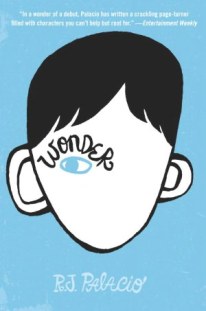
Wonder by R. J. Palacio

Ten-year-old Auggie Pullman, who was born with extreme facial abnormalities and was not expected to survive,  goes from being home-schooled to entering fifth grade at a private middle school in Manhattan, which entails enduring the taunting and fear of his classmates as he struggles to be seen as just another student.


2013 Flora Stieglizt Straus Award (Non-Fiction)
Beyond Courage: The Untold Story of Jewish Resistance During the Holocaust by Doreen Rappaport

Twenty-one brilliantly detailed accounts illuminates the defiance of tens of thousands of Jews across eleven Nazi-occupied countries during Word War II. In answer to genocidal madness that was Hitler's Holocaust, the only response they could abide was resistance, and their greatest weapons were courage, ingenuity, the will to survive and the resolve to save others or to die trying.


2013 Claudia Lewis Award (Poetry)
National Geographic Book of Animal Poetry: 200 Poems with Photographs that Speak, Soar, and Roar! Edited by J. Patrick Lewis

Beautiful photography compliments and extends the 200 enchanting poems about animals written by some of your favorite poets, such as Robert Frost, Emily Dickinson, Carl Sandburg, our old favorite Anonymous, even Vita Sackville West (who knew!) and of course, our Children's Poet Laureate and editor of this lovely volume, J Patrick Lewis.


Congratulations to the winners!

Friday, February 1, 2013

Long Lankin by Lindsey Barraclough

It is August 1958. Cora Swift, 12, and her sister Mimi, 4, have just arrived at Bryers Guerdon from London to live with their Auntie Ida Eastfield at Guerdon Hall, a ramshackle estate that has been in their family for centuries.  Their mother is gone again, and their dad had no where else to send them until she returns home.  Where her mum is is a mystery to Cora.

But Auntie Ida doesn't want them living with her and immediately gives them a list of things they must never, ever do, odd things like always keep the doors locked and never open a window, never go into any rooms upstairs except the bedroom and the bathroom, never go behind the house, never ever go to the marshes when the tide is out, never dare to go to the old church nearby.  Of course, once Cora posts the letter Aunti Ida writes to her dad, the kids will be going back to London with him.

Luckily, Cora ad Mimi have already run into Roger and Pete, who live in the area and have become instant friends.  And of course, on the way to post the letter to their dad, the first thing they do is get waylaid with their new friends and go to the forbidden church.  But will playing in the graveyard that surrounds the church, Cora and Mimi both see a man who then disappears. Mimi says it is Old Peter, the man in the picture at Auntie Ida's that hangs near the bathroom.  That picture scared Mimi so much the day before she wet the bed in the night instead of going to the bathroom.  And Old Peter isn't the only one they see, there are specters of children in the graveyard, too.  But who are they? Why are they there?

It doesn't take Cora long to become curious about all the odd things that are going on and she starts searching for some answers.  And what she uncovers is a chilling story that has terrorized Bryers Guerdon for centuries and it involves the death of young children.  And now it looks like Mimi might be in danger.  Little by little, Cora and Roger uncover the secrets that villagers, and especially Auntie Ida, have held for years and which might help explain why Auntie Ida so vehemently does not want the two girls living with her and why Cora's mother disappears periodically.

It's hard not to give too much away about this book but Long Lankin is such a deliciously creepy book and it would spoil everything for future readers.  So I am going to stop here and hope I have tantalized you enough to want to read this really exciting novel.

Long Lankin is told from the point of view of three alternating voices, that of Cora, Roger and Auntie Ida.  The way be get different perspectives on the same events as well as background information that would not be known to the other narrators.  This way, they not only fill in gaps, but give historical background, especially Auntie Ida.  And this round robin of narrators adds to the buildup of tension that culminates in the denouement.  And what a denouement it is.

Long Lankin is a story is based on a rather sinister old 18th century English ballad. Barraclough has taken each of the two line verses and woven them into a rather Gothic-like story.  The ballad is included in to front of the book, so be sure to read it before you begin Long Lankin.

If you like a gripping mystery shrouded in Gothic tropes, Long Lankin is the book for you.

Long Lankin is book 1 of my 2013 YA/MG Fantasy Reading Challenge hosted by The Book Cellar

 
Imagination Designs